
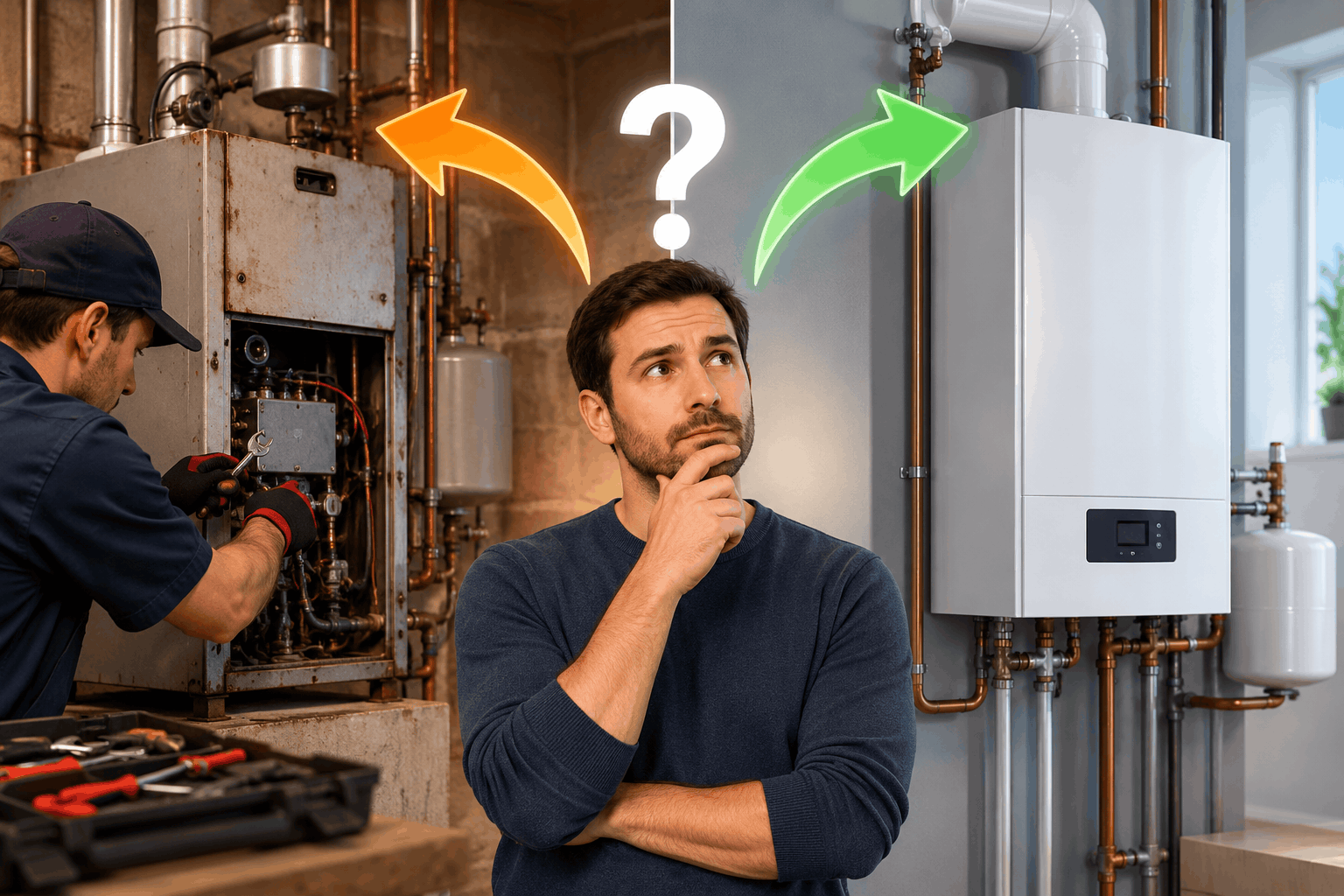
The decision to repair or replace your boiler comes down to factors like the boiler’s age, condition, efficiency, and repair costs. A well-functioning boiler with a cost-effective fix should rather be repaired, whereas a boiler suffering frequent breakdowns, high repair costs, impaired efficiency, and unavailable replacement components might require replacement.
Boilers are one of the most commonly used household appliances. However, we often underestimate the importance of our boilers until they develop a fault and lose heating capacity or hot water. During the winter season, a breakdown becomes more stressful when keeping your home warm is particularly crucial. When your boiler develops a fault, deciding whether to repair it or replace it depends on several factors.
Some of these are:
In some cases, a simple repair is enough to fix the problems. But if your boiler often breaks down and repair costs are increasing, replacing it may be the best option.
Some boiler issues are simple and easy to fix, whereas others may require more extensive repairs. Understanding the common warning signs can help you decide when to arrange a repair or replace your boiler.
Examine your boiler’s pressure gauge. If the reading is below the recommended range, it might point to pressure loss due to a water leak or the need to repressurise the system. When the pressure keeps dropping, contact an expert heating engineer to identify the root cause. Sometimes, the issue might be easy to fix and cost-effective.
When your boiler is not providing sufficient heat or hot water, check the thermostat and boiler pressure first. If neither shows a problem, then the issue may involve internal components such as the diaphragm and may require diagnosis by a qualified heating engineer.
Noises such as banging, gurgling, or kettle-like sounds can point to limescale or sludge buildup, trapped air or an issue with a component. An engineer might suggest cleaning the system or repairing the faulty part depending on the cause. The cost of the work can help you decide whether repairing the boiler is a sensible option.
A water leak might be caused by a faulty valve, seal, pump, or corroded pipework. A qualified heating engineer determines the root cause and assesses whether the faulty component can be fixed. Extensive corrosion or metal deterioration of the boiler itself may mean that replacement is a better option.
While many boiler faults can be repaired, some issues might point to replacement as a practical long-term option. Consider the following warning signs before deciding which option is best.
Rising energy bills can indicate that your heating system is using more fuel than before. Wear and tear, limescale build-up and other faults can directly affect performance. But energy prices, insulation and heating schedule can also affect your bills. That is why it is important to check possible reasons for the increase before deciding whether your boiler needs attention.
As boilers get older, their components can wear out, and their efficiency may decrease. An older boiler may continue to work properly, but it is important to compare its condition, running costs and repair history with the cost of replacing it.
Older non-condensing boilers typically use more fuel to produce the same amount of heat than modern condensing models. Therefore, age alone does not influence the decision, but also the type of boiler that is installed in your home.
It is normal for a boiler to need repairs from time to time, but frequent breakdowns can make an older boiler cost more to keep working. If the same part keeps breaking down, or repair costs become almost as expensive as replacing the boiler, compare the long-term costs of both options before investing more money in repairs.
Banging, clunking, kettling, and gurgling can be a sign of limescale build-up, trapped air, delayed ignition or worn-out parts. Some issues can be repaired without replacing the boiler. But frequent faults or expensive repairs may mean it needs replacement.
As a boiler gets older, replacement components are discontinued and difficult to find. When an engineer confirms a necessary part is no longer available, replacing the boiler may be the most practical option.
When your boiler’s flame is yellow or orange rather than blue, it might point to a combustion problem and a potential carbon monoxide risk. You should turn the appliance off and contact a Gas Safe registered engineer. Do not use the boiler again until it has been checked.
When your home takes longer than normal to warm up, or some radiators remain cold, your heating system may have a problem. The possible reasons are sludge in the system, circulation issues, trapped air, or a boiler fault. A professional can find out the root cause and determine whether a repair will get your heating system working properly again.
The age of your boiler can help you understand whether it may need replacement, but it should not be the only factor to consider. Its condition and performance matter more than its age alone.
For instance, you service a 12-year-old boiler each year, and it has only broken down once. Compare this with a 6-year-old boiler that frequently develops problems. The older boiler is the one that breaks down less often and is a more dependable option.
But age still can play a crucial role in your decision. Most contemporary boilers are designed to last around 10 to 15 years. Over time, replacement components are difficult to find, and their performance might decrease.
If your boiler is safe, dependable and cost-effective to repair, it may be worth keeping. If it often breaks down, becomes highly expensive to repair or becomes less efficient, it is time to look for a replacement.
Comparing repair costs with a new boiler can help you decide which option is more affordable in the long run. The total cost is based on the fault, boiler type, availability of parts and complexity of the work.
A Gas Safe registered engineer might charge you around £80- £120 for a callout, plus £50-£100 per hour for labour. The visits during weekends and evenings can cost more.
Estimated costs for some common repairs include:
The cost of a new boiler is based on the model, installation complexity, and whether you are replacing an existing boiler or making changes to your heating system.
Typical costs include:
Choosing whether to repair or replace your boiler is based on its age, condition, efficiency, and the cost of the repairs. If your boiler functions well and the fault is relatively simple and cost-effective to fix, repairing it may be the best option. However, frequent breakdowns, rising repair costs, reduced efficiency, or unavailable replacement components may make installing a new boiler more practical.
Before making a decision, compare the cost of repairing your current boiler with the cost of installing a new one. Consider the possibility of future breakdowns and repair costs. By considering these factors and getting advice from a qualified heating engineer, you can select the option that best suits your home and budget.
Experiencing boiler problems? Schedule an examination at MSJ Plumbing and Drainage LTD with a qualified heating engineer to find out the fault and discover your repair options.