
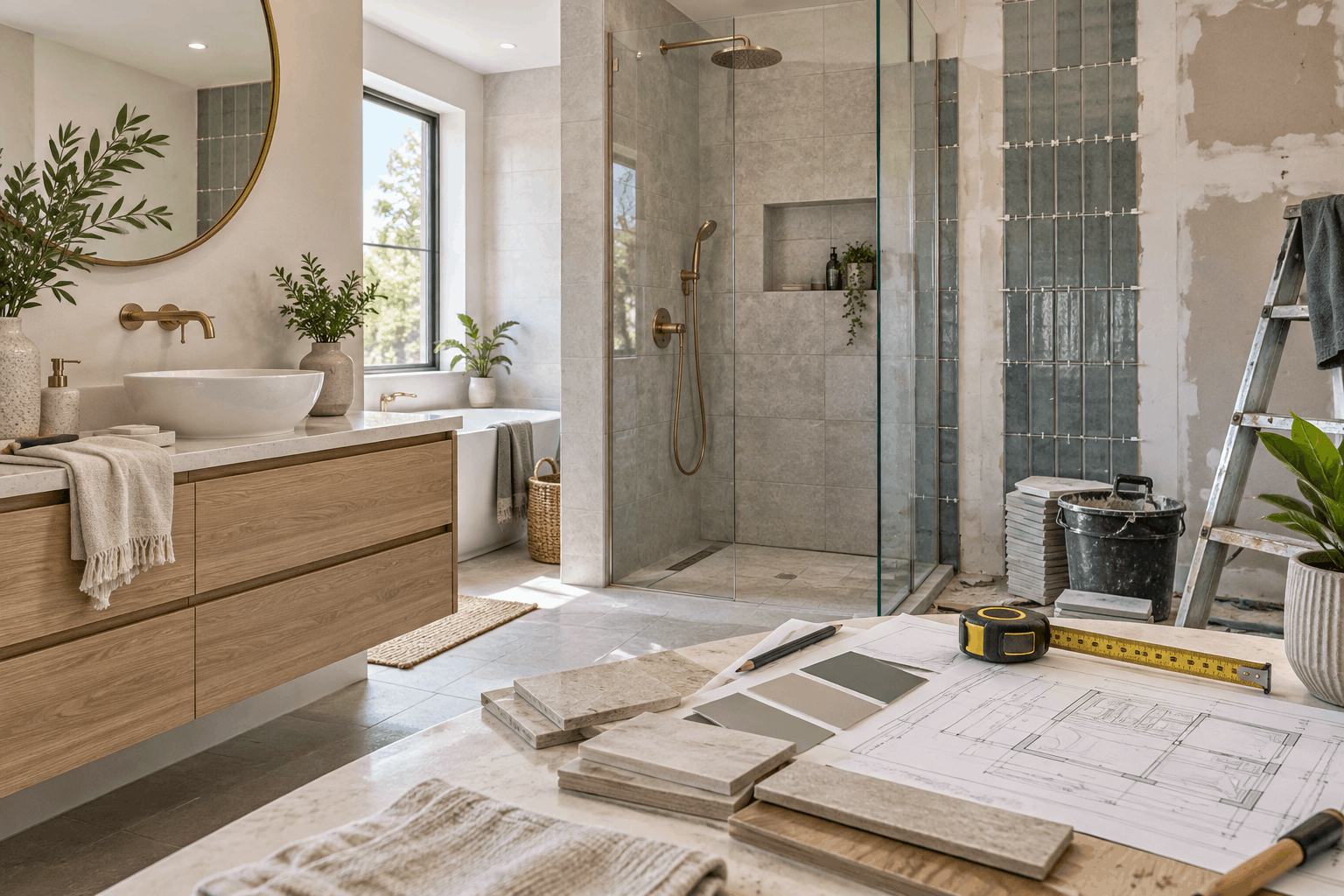
There is no doubt that bathrooms are among the most frequently used rooms in your home. Everyone uses them every day, and they can experience a lot of deterioration with the passage of time. Whether you want to make repairs, update the décor, or completely renovate your bathroom, it can be a big project.
If you have decided to renovate your bathroom, knowing what you can expect and what to consider can help you avoid unnecessary stress and costly mistakes. Here are several things to think about and some simple tips to help you begin planning your new bathroom.
Before starting your bathroom renovation, it is important to set a realistic budget. The entire cost can vary based on different factors like the bathroom’s size, the selected material quality, and the level of your DIY work.
The goal of a bathroom renovation may be to give the space a fresh, modern appearance, but not every older feature needs to be replaced. In older properties, removing wall tiles can be difficult because they may be secured with thick layers of concrete and wire mesh.
A well-lit bathroom works best when you combine different types of lighting, including task, accent, ambient, and decorative lights. Consult a bathroom designer or lighting expert to develop a lighting plan that fits your space and requirements.
Ask a bathroom designer for one of their most reliable design tips, and avoiding a toilet directly in front of the door is likely to be one of them. The reason is simple: bathroom doors are often left open, so you or your guests passing by may have a clear view of the toilet, which isn’t exactly the most attractive feature.
If you have a compact bathroom, you might assume there isn’t enough room for a bathtub. However, many manufacturers now offer smaller tub designs that can fit comfortably into limited spaces while still looking stylish.
Understanding basic measurements, such as the typical size of a bathtub and the space required around a toilet, can help you plan your bathroom renovation more effectively.
Standard bathroom countertops are usually around 32-34 inches high. However, the type of sink you choose can affect the overall height. For example, if you install a raised vessel sink, consider lowering the countertop so it remains comfortable for every task, like washing your hands or brushing your teeth.
A vanity should be practical as well as attractive. Choosing one that is too large can restrict movement around the bathroom, while one that is too small may leave you short on counter space and storage. The wrong material can also create extra maintenance and durability problems.
If your bathroom has limited space and the doors create movement problems when they open, you can place the sink in a corner. This way you can free up some valuable floor space and improve the room’s layout.
Because bathrooms are usually smaller spaces, spending a little more on selected high-quality materials and finishes can make the room feel much more luxurious. Instead of choosing the cheapest options for everything, consider upgrading certain features such as wall and floor coverings, countertops, or other finishes.
Bathroom renovations often run into the same common problems, such as going over budget, poor planning, inadequate ventilation, or purchasing products without checking with the installer first. Here are key mistakes to watch out for:
When Should You Hire a Professional?
While some bathroom upgrades can be done yourself, it’s best to hire a professional when the job requires specialist knowledge, experience, or proper installation, such as:
Bathroom improvements and renovations don’t have to be complicated. A professional bathroom design and installation service can make the process of creating your ideal space much easier. Experienced bathroom fitters are capable of handling the job efficiently, ensuring everything runs smoothly from start to finish.
A well-planned bathroom renovation can make better use of your space while improving storage, style, and lighting. With the right layout and professional expertise, you can create a bathroom that is both practical and attractive.